Take a moment right now to notice how you're sitting or standing. Are your shoulders rounded forward? Is your head jutting ahead of your body? Are you slouching?
If so, you're not alone. Poor posture has become epidemic in our modern world, and it's affecting far more than just how you look. At Marshall Chiropractic & Wellness Center in Tulsa, we see the consequences of poor posture every day—and we help patients correct it.
What Is Poor Posture?
Good posture means your body is aligned so that stress on your muscles, joints, and ligaments is minimized. When viewed from the side, your ear, shoulder, hip, knee, and ankle should form a relatively straight vertical line.
Poor posture occurs when this alignment is disrupted. The most common postural problems include:
Forward Head Posture: Your head shifts forward, often from looking at screens. For every inch your head moves forward, it adds 10 pounds of stress to your neck.
Rounded Shoulders: Your shoulders roll forward and your upper back becomes rounded, creating a hunched appearance.
Anterior Pelvic Tilt: Your pelvis tilts forward, creating an exaggerated curve in your lower back.
Text Neck: The head-down position from constantly looking at phones and tablets.
These postural distortions don't happen overnight. They develop gradually from daily habits, and they create serious health consequences over time.
The Hidden Health Effects of Poor Posture
Most people know that poor posture can cause back and neck pain. But the effects go much deeper.
Chronic Pain
Poor posture creates muscle imbalances. Some muscles become overly tight while others weaken. This imbalance leads to chronic tension and pain in your neck, shoulders, upper back, and lower back.
The pain often starts mild and intermittent but gradually becomes more frequent and intense. Many patients don't connect their daily posture habits with their chronic pain until Dr. Marshall points out the relationship.
Headaches
Forward head posture places tremendous strain on the muscles at the base of your skull and in your upper neck. This tension is a common trigger for tension headaches and can contribute to migraines.
If you experience frequent headaches, especially ones that start in your neck or the back of your head, poor posture may be the culprit.
Reduced Lung Capacity
Slouching compresses your chest cavity and prevents your lungs from fully expanding. Studies show that poor posture can reduce lung capacity by up to 30%.
When you can't breathe deeply, less oxygen reaches your brain and muscles. This contributes to fatigue, difficulty concentrating, and reduced physical performance.
Digestive Issues
Slumping compresses your abdominal organs, potentially affecting digestion. Some research suggests poor posture can contribute to issues like acid reflux and constipation.
Fatigue and Low Energy
When your body is misaligned, your muscles must work harder to keep you upright. This constant extra effort is exhausting. Poor posture also affects circulation and breathing, both of which impact energy levels.
Many patients report feeling more energetic after their posture improves through chiropractic care.
Mood and Confidence
Research shows that posture affects mood and self-perception. Slouched posture is associated with lower mood and decreased confidence, while upright posture correlates with more positive emotions and greater self-assurance.
How you hold your body influences how you feel and how others perceive you.
Common Causes of Poor Posture
Understanding what causes poor posture helps you make changes:
Prolonged Sitting: Hours at a desk, in a car, or on the couch encourage slouching and forward head position.
Screen Time: Looking down at phones, tablets, and laptops pulls your head forward and rounds your shoulders.
Weak Core Muscles: Your core muscles support proper spinal alignment. When they're weak, your posture suffers.
Previous Injuries: Old injuries can create compensation patterns that affect posture years later.
Stress: When stressed, people unconsciously tighten their shoulders and neck, creating chronic tension patterns.
Repetitive Movements: Jobs or activities that require repetitive motions can create muscle imbalances.
How Chiropractic Care Corrects Posture
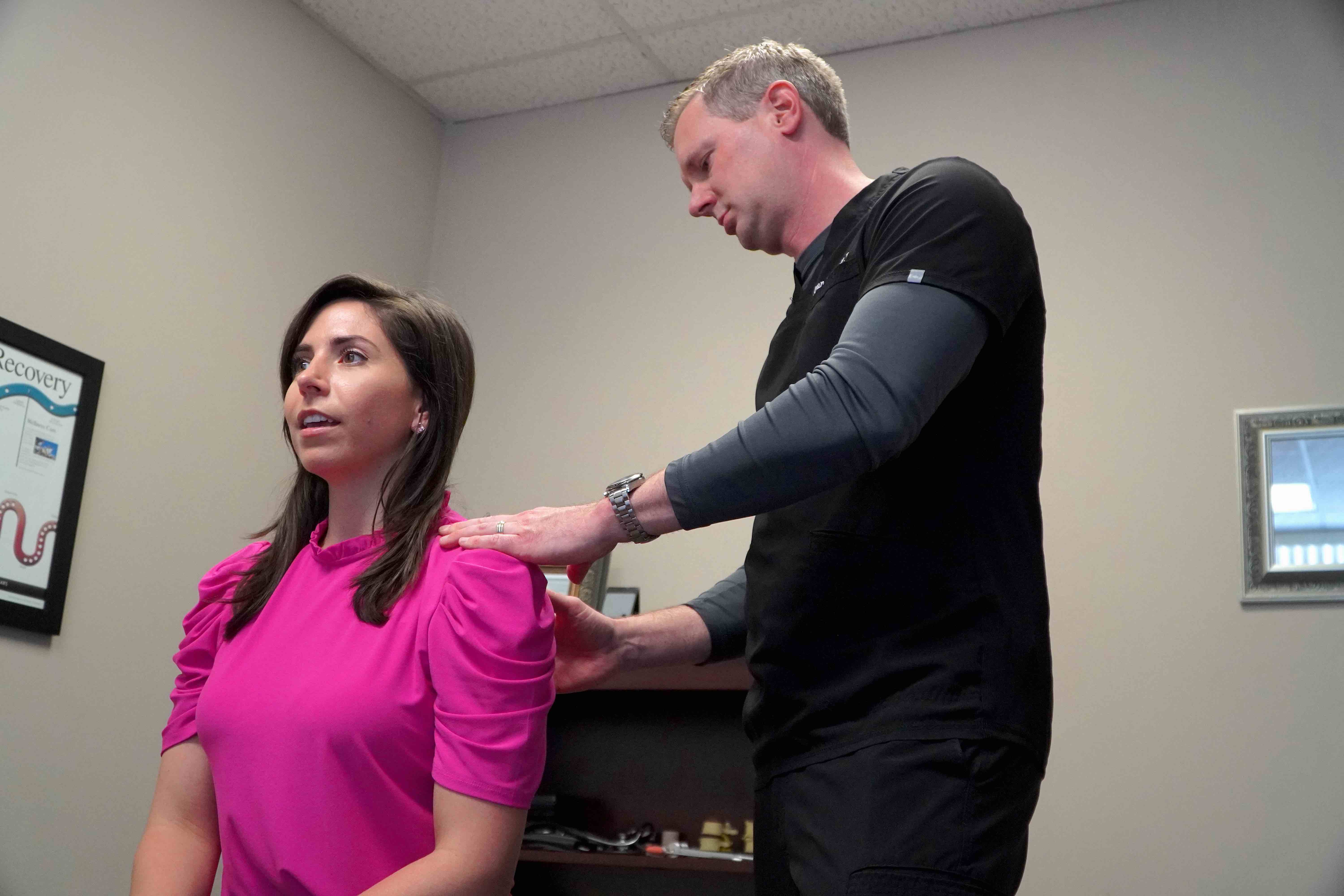
At Marshall Chiropractic, Dr. Ryan Marshall takes a comprehensive approach to posture correction.
Spinal Adjustments
Chiropractic adjustments restore proper alignment to your spine. When vertebrae are misaligned, they pull your posture out of balance. Correcting these misalignments allows your body to return to proper positioning.
Regular adjustments retrain your spine and nervous system, helping good posture feel natural again.
Muscle Therapy
Tight, overworked muscles must be released before posture can improve. Massage therapy and other soft tissue techniques address muscle tension and help rebalance your musculature.
Corrective Exercises
Dr. Marshall provides specific exercises to strengthen weak muscles and stretch tight ones. These exercises support the corrections made through adjustments and help you maintain better posture between visits.
Ergonomic Guidance
Simple changes to your workspace, car setup, and daily habits can dramatically improve your posture. Dr. Marshall offers practical advice tailored to your specific situation and lifestyle.
Simple Posture Improvements You Can Make Today
While professional chiropractic care provides the most comprehensive posture correction, you can start making improvements immediately:
Adjust Your Workspace: Position your computer monitor at eye level. Sit with your feet flat on the floor and your back supported. Keep frequently used items within easy reach to avoid repetitive twisting.
Set Reminders: Use phone alerts to remind yourself to check your posture throughout the day. Make small corrections frequently rather than waiting until you're in pain.
Strengthen Your Core: Simple exercises like planks, bridges, and bird dogs strengthen the muscles that support good posture.
Take Movement Breaks: Stand up and move every 30-60 minutes. Gentle stretches relieve tension and reset your posture.
Mind Your Phone Use: Bring your phone up to eye level rather than dropping your head down. This simple change significantly reduces neck strain.
The Long-Term Benefits of Good Posture
Correcting your posture delivers benefits that extend throughout your life:
- Reduced pain in your back, neck, and shoulders
- Fewer headaches
- More energy and less fatigue
- Better breathing and circulation
- Improved mood and confidence
- Reduced risk of degenerative spinal conditions
- Enhanced physical performance in sports and daily activities
Start Your Posture Correction Journey
Poor posture develops over years, and correcting it takes time and commitment. But the investment in your health is worth it.
At Marshall Chiropractic & Wellness Center, we've helped Tulsa patients improve their posture and reclaim their health for over 20 years. Dr. Marshall will evaluate your specific postural issues and create a personalized treatment plan to address them.
Don't wait until poor posture causes serious pain or health problems. Contact our Tulsa chiropractic clinic today to schedule your evaluation. Let us help you stand taller, feel better, and live healthier.