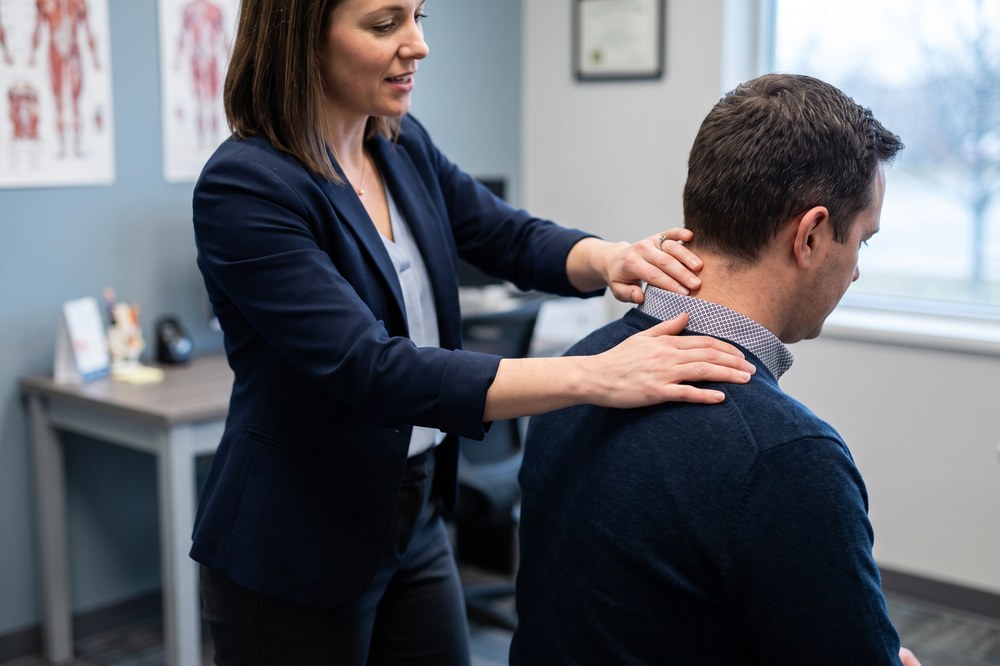
After a car accident, it is normal to have questions even when the crash seemed minor. You may feel sore, stiff, shaken up, or completely fine at first. You may also wonder whether chiropractic care is appropriate, especially if neck pain, back pain, headaches, or reduced movement appear later.
Short answer: A chiropractor may be an appropriate part of your post-accident care after urgent injuries have been ruled out and when your condition is suitable for chiropractic evaluation. If you have emergency warning signs, call 911 or go to the emergency department rather than scheduling a chiropractic visit.
At Marshall Chiropractic in Tulsa, an auto-injury evaluation is designed to begin with a detailed history and assessment. The goal is not to guess at the cause of pain or promise a specific outcome. It is to understand what happened, assess whether chiropractic care may be appropriate, and coordinate a referral when another level or type of care is needed.
Start with safety: when a chiropractor is not the first stop
Some symptoms after a crash need emergency medical attention. The Centers for Disease Control and Prevention advises adults to seek emergency care for danger signs after a possible head injury, including a headache that worsens or will not go away, repeated vomiting, seizures, weakness or numbness, slurred speech, unusual behavior, confusion, one pupil larger than the other, loss of consciousness, or an inability to stay awake. 1
What is happening after the crash?Appropriate next stepYou have a worsening headache, repeated vomiting, seizure, loss of consciousness, confusion, slurred speech, weakness, numbness, poor coordination, unequal pupils, or cannot stay awake.Call 911 or go to an emergency department immediately.1You have severe pain, a visibly deformed area, or you have been instructed to obtain emergency or urgent medical care.Follow the emergency or urgent-care recommendation first.You have new neck pain, stiffness, headache, back discomfort, or reduced movement without emergency danger signs.Arrange a prompt evaluation with an appropriate healthcare professional. A chiropractic evaluation may be one option when clinically appropriate. 2You have already been medically evaluated and want help managing a musculoskeletal concern or restoring comfortable movement.Discuss whether chiropractic care, exercise-based rehabilitation, physical therapy, or another plan is appropriate for your diagnosis and goals. 3
This article is educational and does not replace a diagnosis or individualized medical advice. When in doubt after a collision, choose the safer path and seek medical evaluation.
Why symptoms can show up after you leave the scene
The absence of immediate pain does not prove that you have no injury. For example, symptoms associated with whiplash often begin within days of an injury. They may include neck pain and stiffness, pain that worsens with neck movement, reduced range of motion, headaches, pain in the shoulders or upper back, tingling or numbness in the arms, fatigue, or dizziness. 2
Whiplash describes a neck injury caused by rapid, forceful back-and-forth movement of the neck. Rear-end crashes are a common cause. 2 Car accidents are also a common cause of neck pain generally, and the best treatment depends on the cause of the symptoms. 4
That is why it is sensible to pay attention to changes in the hours and days after a crash. Write down new symptoms, when they started, what makes them better or worse, and how they affect sleep, work, driving, or routine activities. This information can help any treating clinician make a more informed assessment.
When chiropractic care may fit into post-accident care
Chiropractic care can be a conservative option within a broader plan for certain musculoskeletal complaints, but it is not a substitute for emergency assessment or care for conditions outside a chiropractor’s scope. A qualified clinician should first consider whether signs or symptoms indicate a fracture, serious neurological problem, concussion, or another condition that needs urgent medical attention or specialty care.
For uncomplicated neck pain or whiplash-type symptoms, care plans vary from person to person. Mayo Clinic notes that treatment can include pain control, movement and exercise, and sometimes physical therapy; its review of alternative therapies says some studies suggest chiropractic manipulation may ease pain when paired with exercise or physical therapy. It also notes that manipulation can cause minor problems such as numbness or dizziness and, rarely, damage to spinal tissues. 3
The practical takeaway is straightforward: a thoughtful evaluation matters more than a one-size-fits-all treatment promise. Your care plan should reflect your symptoms, exam findings, medical history, crash details, and response to care. It should also include a clear plan for referral if the evaluation suggests you need imaging, a medical doctor, physical therapy, or another service.
What to expect at a car-accident chiropractic evaluation in Tulsa
At an initial visit, be prepared to describe the collision in detail. Healthcare professionals commonly ask about how the event happened, when symptoms began, how intense they are, whether movement changes the pain, prior neck problems, daily medications, and what you have already tried. 3
A careful examination may include observing how your neck, shoulders, and back move, checking for tenderness, and assessing strength, reflexes, and sensation when appropriate. 3 Imaging can sometimes help rule out other conditions, although a whiplash injury itself may not appear on imaging. 3
Marshall Chiropractic’s auto-injury care information explains that the practice uses detailed evaluations, including mobility testing and digital X-rays when indicated. The practice also says it can coordinate referrals to other professionals, such as medical doctors, MRI providers, or physical therapists, when a patient needs care beyond chiropractic services. That referral-minded approach is important after a crash because the right care may involve more than one type of clinician.
A practical checklist before you book
A short preparation step can make your first conversation more useful. Gather the accident date and location, the type of collision, your seat position, whether you were wearing a seat belt, whether airbags deployed, and whether you hit your head or lost consciousness. Bring any discharge paperwork, imaging reports, medication list, insurance information, and crash-report details you already have.
Also note your symptoms without minimizing or exaggerating them. A simple record such as “neck stiffness started the next morning and makes checking blind spots difficult” is more useful than a vague statement like “my neck hurts.” If symptoms change, write down the change and tell your healthcare professional promptly.
Frequently asked questions
Should I see a chiropractor after a minor car accident?
You may consider a chiropractic evaluation if you develop musculoskeletal symptoms and have no emergency warning signs, but a “minor” crash does not determine whether an injury is present. Seek prompt medical evaluation for neck pain or other whiplash symptoms after an accident so potentially more serious injury can be ruled out. 2
Can a chiropractor help with whiplash after a car accident?
A chiropractor may be one member of a care team for some people with whiplash-related musculoskeletal symptoms. The appropriate plan depends on the individual evaluation. Mayo Clinic notes that some studies suggest chiropractic care may help ease pain when combined with exercise or physical therapy, but the evidence is limited and treatment should be individualized. 3
Should I go to the emergency room or a chiropractor after a crash?
Choose the emergency department or call 911 if you have danger signs such as worsening headache, repeated vomiting, seizures, confusion, weakness, numbness, slurred speech, loss of consciousness, or severe drowsiness. 1 If emergency dangers are absent but you have new pain or stiffness, arrange a prompt clinical evaluation and ask whether chiropractic care is appropriate for you.
Do I need a referral before seeing a chiropractor in Tulsa?
Referral requirements depend on your insurance plan and clinical situation. Call your insurer and the office before your appointment to verify coverage and ask what records to bring. If you have already been seen at urgent care or an emergency department, bring those records to help inform your evaluation.
Talk with a Tulsa auto-injury chiropractor
If you have been in a car accident and are experiencing neck pain, back discomfort, stiffness, or reduced movement, Marshall Chiropractic can help you understand whether a chiropractic evaluation is appropriate. The office can also help identify when a referral or additional medical evaluation should come first.
Call Marshall Chiropractic at (918) 494-0929 to discuss an auto-injury appointment in Tulsa. If you have emergency warning signs, call 911 or go to the nearest emergency department instead.
References